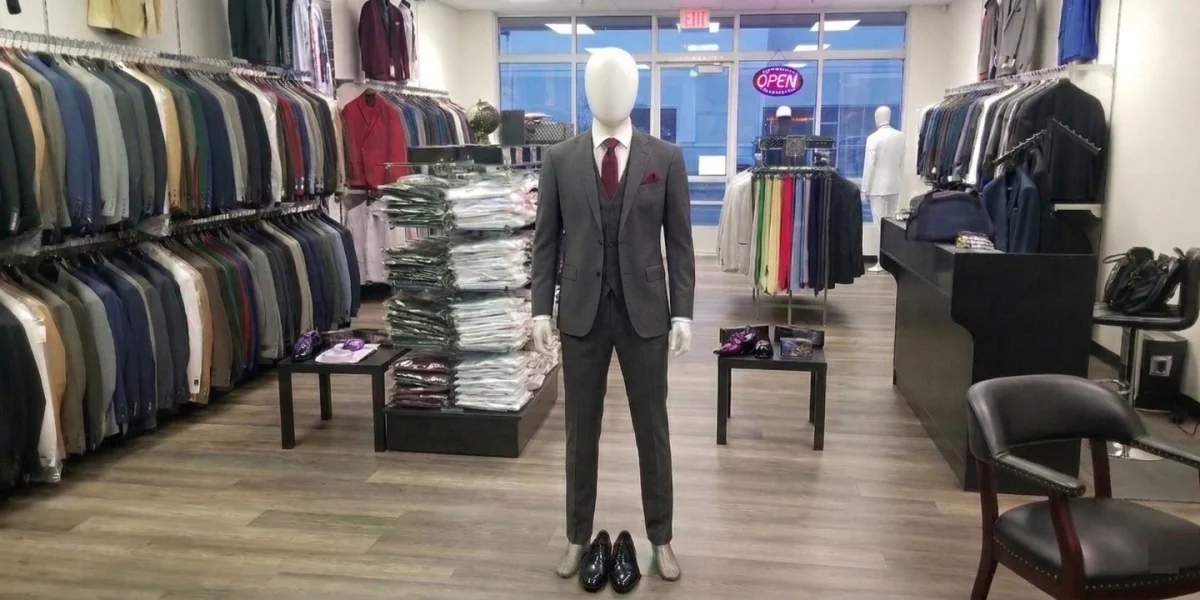
Our Shop: 4539 E. Thomas Road, Suite 104, Phoenix, AZ 85018, US

Groomsmen Suits: Should You Buy or Rent in 2026?

Groomsmen Suits: Should You Buy or Rent in 2026?

For Phoenix Groomsmen Suits, the Buy vs Rent decision is a matter of thermal survival. In 2026, purchasing High-Twist Wool is the superior capital allocation over synthetic rentals. Ownership ensures Canvas Memory and open-weave ventilation for the 110°F heat, delivering long-term value-per-wear rather than a sunk cost.

Outfitting a wedding party isn’t aesthetics. It’s physics. It’s logistics.

In the Valley, specifically under the 110°F sun radiating off Gainey Ranch asphalt or the red rocks of Camelback, a suit is a shield. Or it is a cage.

The rental industry lies. They hand you a garment designed for their survival. Not yours. They build for industrial chemical cleaning. They build to withstand the abuse of fifty previous wearers. They do not build for the groom standing at the altar in June. They ignore the specific Thermal Load of Phoenix.

In 2026, the groom who commands respect understands that renting is a failure of planning. It accepts the lowest common denominator. The alternative is acquiring a permanent asset.

The 2026 Shift: Why Disposable is Obsolete

Disposable formal wear is dead.

The modern man, particularly the demographic operating within the high-stakes environment of Phoenix, rejects the temporary. The psychology shifted. Rentals mark the “Tourist” mindset borrowing an identity. Ownership marks the “Local.” You claim the territory.

Look at the 2026 palette. The black tuxedo is a relic. The Valley demands visual integration with the environment. We see the rise of specific, localized tones: Sandstone, Matte Sage, Terracotta, Dusky Copper. These colors absorb the light of the desert sunset. They do not reflect it in a harsh, synthetic glare. A rental catalogue offers standard black. Standard gray. Usually in a fabric that shines under photography flash like wet plastic.

Align with the environment. A Sandstone suit in high-twist wool absorbs the visual warmth of the desert. It rejects the thermal load. A rental suit fights the environment. It stands out as an alien object. Ill-fitted. Visually jarring against the Sonoran landscape.

This shift in mindset is a shift in timing. The anxiety regarding lead times is misplaced. The 12-Week Protocol isn’t a delay. It is the necessary Gestation Period. Structural Integrity takes time. The instant gratification of a rental indicates a lack of value. A garment you pick up in an hour has no soul. The 12-week buffer allows us to source the specific cloth. Build the canvas. Calibrate the fit.

The Thermal Load: Surviving the Sonoran Reality

To understand rental failure, look at the physics. The Sonoran Desert produces radiant energy. Stand on the granite terrace of The Boulders in late May. The ambient air temperature hits 102°F. The radiant heat coming off the stone drives the “Real Feel” closer to 115°F.

Physics ignores your budget.

In this environment, your body has one defense mechanism: evaporative cooling. Sweat must leave the pores. Pass through the shirt. Pass through the jacket. Evaporate into the dry air.

The “Sweat-Box” rental suit is a thermal death trap. They build them from industrial polyester. They fuse them with glue. This creates a hermetic seal around your torso. It functions like a plastic bag. Moisture cannot escape. It condenses against the lining. It creates a layer of superheated humidity between your skin and the fabric. You aren’t just hot. You carry a micro-climate of misery. Heart rate elevates. Posture collapses. Panic sets in.

We operate differently. We view the suit as a mechanical cooling system. We use High-Twist Fresco wool. We use a Butterfly Lining. By stripping the excess heavy satin from the back of the jacket, we expose the shell fabric to the air. This creates a chimney effect. Hot air rising from your body vents out through the collar. It vents through the open weave of the back. You feel the difference immediately. Standing in a greenhouse vs standing in the shade. You remain composed. The rental party suffocates.

Case Study: The Silverleaf Incident

I stood at the back of the terrace at Silverleaf last June. I didn’t need a thermometer to see who had rented and who had invested. The evidence was running down their faces.

The Control Group: Five groomsmen outfitted in standard, mass-market polyester rentals. By minute 15 of the ceremony, the failure of the “Sweat-Box” architecture was absolute. Visible perspiration saturation penetrated the jacket backs at the lumbar region. Under direct UV exposure, the fused interlinings destabilized. This caused “lapel bowing” the jacket front curling away from the chest. The synthetic fabric reflected the intense sunlight. It created a high-gloss, plastic sheen that ruined the photographic integrity. The silhouette collapsed into thermal distress.

The Variable: The Groom. He wore a Van Allans Ready-Made suit constructed from High-Twist Fresco in Matte Sage. Despite the identical thermal load, the result was distinct. The Open-Weave Ventilation allowed for continuous air exchange. It evaporated moisture before saturation occurred. The Floating Canvas maintained the line. It kept the lapel flush against the chest. The fabric retained a rich, matte finish. It absorbed the harsh light. The groomsmen merely endured the event. Physically compromised by their equipment. The Groom commanded the event. This is the operational difference between a rental costume and a technical asset.

Technical Superiority: Canvas vs. Glue

The difference is internal architecture. You need to understand Fused Construction vs Floating Canvas Construction.

Mass-market rentals use Fusing. A manufacturing shortcut. They glue the inner lining directly to the outer fabric using heat-activated resins. It creates a stiff, lifeless shell. Impenetrable to air. Under the intense UV exposure of a Phoenix afternoon, the glue destabilizes. This leads to high Delamination Risk. The suit decomposes on your body. Bubbling. Separating as the chemical bond fails.

We utilize the Floating Canvas. A layer of canvas horsehair and cotton sits between the suit fabric and the lining. Not glued. Stitched. It floats.

This achieves two objectives.

First, it creates a micro-channel for airflow. The suit breathes. The wind cutting across a golf course in the Valley penetrates the fibers. It cools your torso.

Second, the canvas possesses Canvas Memory. A biological adaptation of the garment. Horsehair is a natural fiber. It responds to heat and humidity. As you wear the jacket, your body heat warms the canvas. It softens. It molds to the specific topography of your chest. It learns the protrusion of the clavicle. It memorizes the slope of the shoulder. A suit with Canvas Memory becomes Anatomically Adaptive on the tenth wear. It ceases to be a piece of clothing. It becomes a second skin. A fused rental never learns. It remains a rigid, foreign object fighting the body until you return it.

The Fiber Physics: Fresco and Ventilation

Look at the fiber. The only viable option for the Phoenix climate is High-Twist Fresco.

Standard wool fibers lie flat. They trap heat. High-Twist Fresco is spun tightly before it is woven. This high-tension spinning creates a yarn that is naturally springy. Resilient. When woven, the twist prevents the fibers from matting together. This creates Open-Weave Ventilation.

Hold a piece of Fresco wool up to the sun. You can see pinpricks of light through the fabric. That is your ventilation system. It allows the desert breeze to pass through the garment. It carries away body heat. To maximize this, we utilize the Butterfly Lining. This combination creates a mechanical cooling system requiring no power source. Only physics.

High twist also provides wrinkle resistance. A rental suit, made of soft synthetics, looks haggard and creased after an hour in a limousine. High-Twist wool utilizes the kinetic energy of the yarn to spring back into shape. You stand up. The suit snaps back. It holds the line even after three hours in the back of a Cadillac.

The Math of Ownership: A Value-Per-Wear Audit

Analyze the capital allocation using Value-Per-Wear (VPW). The rental industry relies on your inability to calculate long-term value. When you rent a suit, you engage in a Capital Drain. You pay a fee. You use the item for six hours. You return the item. Your equity in that transaction is zero. Sunk Cost.

Buying is different. This is a Capital Allocation strategy. The initial outlay secures an asset entering your permanent arsenal. Not a “Wedding Suit.” A garment of business. A garment of evening social engagement. A Legacy Piece.

Here is the asset lifecycle.

Event 1: The Wedding in Year 1. Initial capital allocation made. You wear the suit to the ceremony. You survive the heat. You look impeccable in the photos. The VPW equals the purchase price. But you still possess the asset.

Event 2: The Boardroom in Year 1, Month 4. Critical presentation. Or an interview. You do not scramble. You go to your closet. Pull out the Van Allans suit. It fits perfectly. The Canvas Memory has set. You walk into the room with the confidence of the Mirror Protocol. The VPW cuts in half.

Event 3: The Anniversary. You’re at Ocean 44. You aren’t wearing the full suit you’ve paired the jacket with raw denim and a crisp white shirt. You look like the most intentional man in the room, and the suit has already paid for itself.

By the end of year three, the suit served you in a dozen critical moments. The Value-Per-Wear is negligible. You extracted maximum utility from the asset. A rental fee is a singular burn. A Van Allans suit is a dividend-paying stock.

Operational Realities: Hard Answers for the 2026 Season

Is the 12-Week Buffer necessary? The 12-week timeline is a manufacturing imperative. Not a marketing tactic. In 2026, the global supply chain for high-grade milled wool is constricted. We do not pull garments from a dusty warehouse. We secure the yardage. If you plan a ceremony at The Phoenician, do not rely on “Just-In-Time” logistics. The 12-week buffer ensures the garment is inspected. The Floating Canvas is set. The fit is calibrated. Demanding speed sacrifices the architecture. Do not gamble.

Is asking groomsmen to buy imposing? This logic fails. Forcing a groomsman to rent a plastic tuxedo is the true imposition. You force them to allocate capital into a 100% loss vehicle. They pay the fee. The equity vanishes the next morning. When you mandate a purchase from Van Allans, you guide them toward Asset Management. You ensure they acquire a Legacy Piece. It serves them in the boardroom. Future engagements. Focus shifts from “Spending” to “Capital Allocation.” A man appreciates an asset. He resents a receipt for a rental.

Why High-Twist Wool? Isn’t Linen better? Linen is a thermal solution. But a visual failure. Linen lacks memory. Ten minutes into a reception at Silverleaf, a linen suit collapses into a labyrinth of wrinkles. It looks chaotic in high-definition photography. High-Twist Tropical Wool (Fresco) provides the same ventilation properties as linen. The desert breeze passes through the weave. But it retains the Mirror Protocol. The yarn is spun under high tension. It snaps back to the vertical line. Cooling effect without visual degradation.

Can we rent and tailor? Impossible. You cannot alter a fused garment. A rental jacket is a sealed unit held together by industrial glue. If a tailor opens the seams to suppress the waist or lift the shoulder, the fusing fails. This leads to Delamination. Rental inventory is “One-Size-Fits-None.” It resists alteration by design. To achieve a silhouette that commands the room, the architecture must be constructed for alteration. That requires a purchased, canvas-grade garment.

Is the Black Tuxedo still standard? The Black Tuxedo is a relic in the Valley. Against the organic backdrop of The Boulders or Papago red rocks, deep black creates a “Visual Void.” It absorbs all light. It flattens the subject into a two-dimensional silhouette. The 2026 Palette demands integration. Sandstone. Matte Sage. Dusky Copper. These tones respect the environment. They hold texture in the golden hour sun. They signal the wearer is a native. Not a visitor replicating a New York aesthetic in a Sonoran reality.

The Baseline: Own Your Identity

The photography is permanent. The heat is unforgiving. You can either walk into the sun with a technical shield, or you can spend the day fighting a plastic bag. The choice is yours. We’ll be in the shop.

Look at a party outfitted in Van Allans. You see Identity Equity. You see Lapel Symmetry. The gorge height aligns with the shirt collar. You see the 12-Week Protocol in action. The fabric absorbs the light. Rich, matte texture anchors the image.

The decision is binary. Rent a costume. Or invest in an asset. Submit to the heat. Or engineer your survival.

In 2026, the man who respects himself does not rent his identity. He owns it.

Secure the canvas. Respect the Gestation Period. Survive the heat.

Hard Truths:

Is the 12-week timeline actually necessary? It’s a manufacturing reality, not a marketing trick. In 2026, high-grade milled wool doesn’t sit in a dusty warehouse; we secure the yardage months in advance. If your ceremony is at The Phoenician, “Just-In-Time” logistics will fail you. Those twelve weeks are for the cloth to arrive, the Floating Canvas to be set, and the fit to be dialed in to the millimeter. Speed is the enemy of architecture. Don’t gamble with the calendar.

Is it an “imposition” to ask groomsmen to buy a suit? Forcing a friend to pay for a plastic rental is the real imposition. You’re making them dump money into a 100% loss vehicle. That equity evaporates the moment they return the suit. When you mandate a purchase, you’re guiding them toward an asset. They walk away with a garment for the boardroom and future events. A man respects a legacy piece; he resents a receipt for a costume he can never wear again.

Why not just use Linen for the desert heat? Linen handles the heat but fails the eyes. It has no memory. Ten minutes into a reception at Silverleaf, a linen suit is a mess of wrinkles. It looks like chaos in high-definition photos. High-Twist Fresco provides the same ventilation the breeze passes right through the weave but the high-tension yarn snaps back to a sharp line. You get the cooling effect without looking like a rumpled mess.

Can’t we just rent suits and have them tailored? No. You cannot “fix” a rental. These jackets are sealed units held together by industrial glue. If a tailor tries to suppress the waist or lift the shoulder, the bond fails. This is how you get Delamination those ugly bubbles in the fabric where the glue separates. Rental inventory is built to be “one-size-fits-none.” To get a silhouette that actually commands a room, the suit must be engineered for alterations from the first stitch.

Is the Black Tuxedo still the standard? Black is a relic in the Valley. Against the red rocks of Papago or the granite at The Boulders, deep black creates a visual void. It flattens the wearer into a two-dimensional shadow. The 2026 Palette is about integration: Sandstone, Matte Sage, and Dusky Copper. These tones hold their texture during the golden hour. They prove the wearer belongs in the Sonoran environment rather than trying to force a New York aesthetic onto the desert.